

Home » Urgent Care » In-House Lab
In-House Laboratory
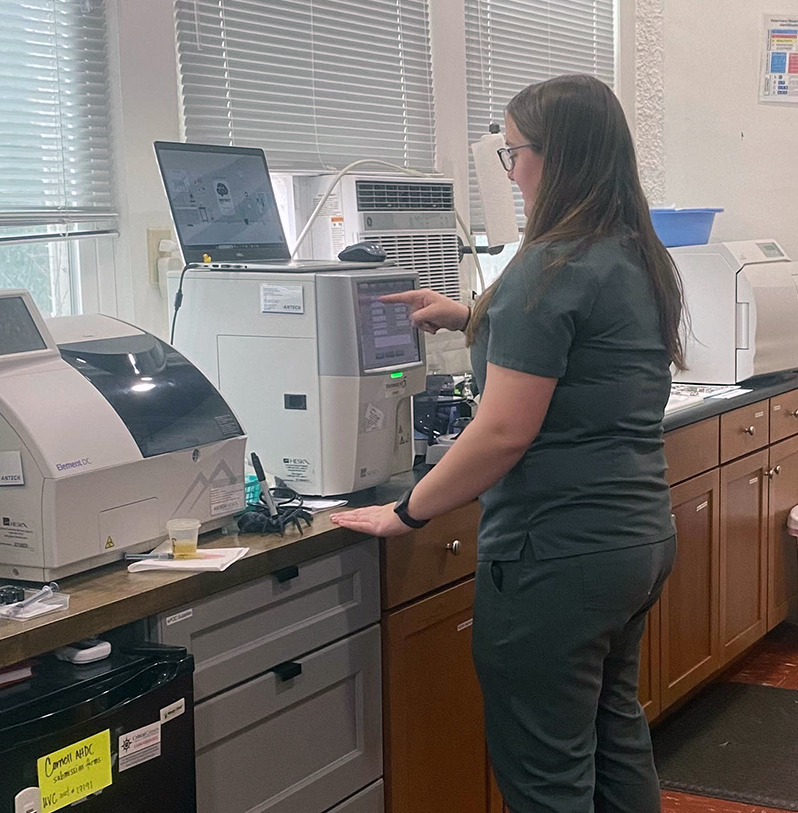
The in-house laboratory at Urgent Veterinary Care is a critical part of our hospital and allows us to perform rapid, on-site diagnostic testing when your pet needs answers quickly. One of the most common tests we run is a blood panel, which provides important information about your pet’s red and white blood cells, organ function (such as liver and kidneys), blood sugar levels, and electrolyte balance.
These tests help us identify concerns like anemia, infection, dehydration, kidney disease, diabetes, and electrolyte imbalances, and they play an important role in guiding treatment decisions during urgent visits.
Because these tests are performed on-site, results are often available within minutes, allowing us to begin appropriate care without unnecessary delay.
Why In-House Laboratory Testing Is Important
Fast Diagnosis and Treatment
- Immediate test results (often within minutes) guide quick clinical decisions.
- Enables same-visit diagnosis and treatment — essential for urgent but stable cases (vomiting, lethargy, infections, urinary issues, etc.).
Improved Patient Outcomes
- Early identification of problems (infection, organ dysfunction, dehydration, etc.) leads to faster interventions and better recovery.
- Reduced Stress for Pets and Owners
- Fewer visits and faster answers reduce anxiety for both pet owners and their animals.
Continuity of Care
- In-house results can be shared promptly with the pet’s primary veterinarian, ensuring seamless follow-up.
Cost-Effective for Clients
- Avoids the delay and added expense of sending samples to external reference labs when time-sensitive answers are needed.
Types of In-House Lab Tests We Perform at Urgent Veterinary Care Include:
1. Hematology (Blood Cell Analysis)
- Complete Blood Count (CBC):
- Evaluates red and white blood cells and platelets.
- Helps detect anemia, infection, inflammation, or clotting problems.
2. Blood Chemistry (Biochemistry Panel): Comprehensive or Basic Chemistry Panel:
- Assesses organ function (liver, kidneys, pancreas).
- Measures electrolytes (sodium, potassium, chloride) and metabolic indicators (glucose, protein, calcium, etc.).
- Important for evaluating vomiting, diarrhea, dehydration, or toxin exposure.
3. Urinalysis
- Detects urinary tract infections, crystals, kidney disease, and diabetes.
- Often paired with chemistry results for a full renal and metabolic assessment.
4. Cytology
- Ear, skin, or mass cytology using a microscope to identify bacteria, yeast, mites, or abnormal cells.
- Helps diagnose infections, allergies, and some cancers quickly.
5. SNAP/ELISA Rapid Tests (Point-of-Care)
- Heartworm (dogs)
- Feline leukemia virus (FeLV) / FIV combo
Parvovirus (dogs) - Pancreatic lipase (Spec cPL/fPL)
- Tick-borne disease panels
6. Coagulation Testing
- Evaluates clotting function in cases of bleeding disorders, rodenticide ingestion, or surgery prep.
7. Blood Gas and Electrolyte Analysis
- Measures oxygen, carbon dioxide, and pH balance.