

Home » Urgent Care » Surgery
Surgery (Limited)
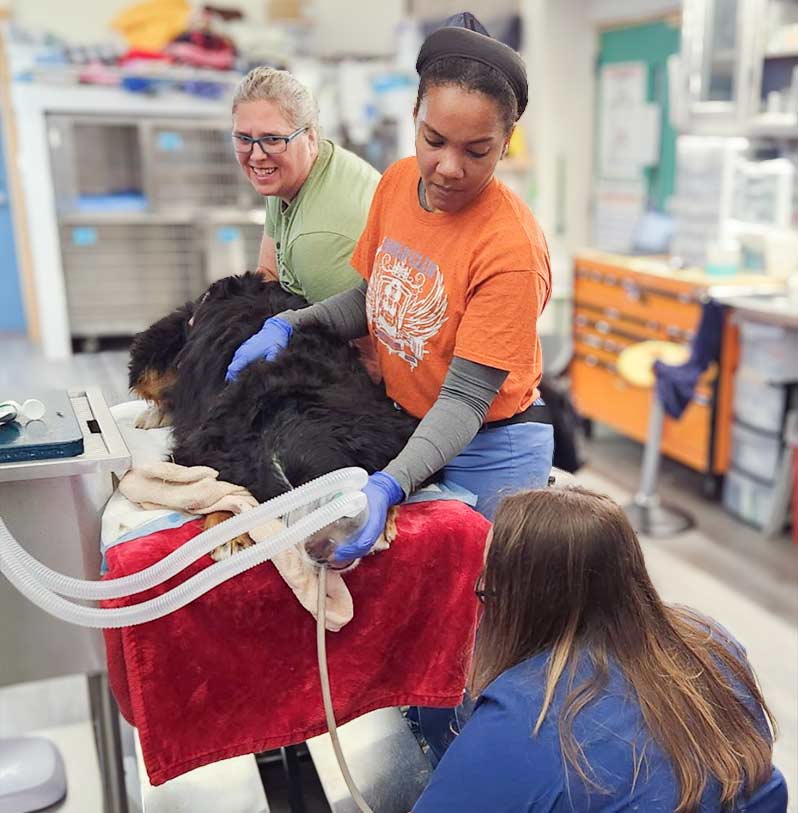
When you arrive at Urgent Veterinary Care, our team will conduct an assessment of your pet that encompasses their medical history and current symptoms. We will then thoroughly discuss our findings with you and our recommended treatment plan, including any surgical procedure that we believe to be necessary. Any and all concerns and risks and potential complications involved in the recommended surgical interventions will be discussed with you so that you and our team can come to the best decision for your pet. Factors to consider include your dog or cat’s overall health and age, the severity of your pet’s condition, possible complications that may occur during or after surgery and what may happen if you elect not to perform the surgery.
medical facility for your pet.
The types of surgery we perform include:
Soft Tissue Surgeries
- Wound repair / laceration closure (e.g., bite wounds, cuts, abrasions)
- Abscess drainage and treatment
- Emergency removal of minor mass or lump removals (e.g., skin growths, small lipomas)
- Ear hematoma repair (aural hematoma)
- Anal sac abscess drainage
- Tail tip injuries
- Toe / nail bed injury repair or toenail amputation
- Suturing or stapling of small puncture wounds
- Bladder stone removal (if patient stable, not obstructed)
- Cystotomy for chronic urinary stones
- Wound or trauma to the prepuce or vulva
- Minor reproductive surgeries (e.g., pyometra if stable, scrotal hematoma)
- Catheter-assisted urinary obstruction relief (male cats, if stable)
Urogenital Procedures
Orthopedic / Limb-Related Soft Tissue Procedures
- Wound management on limbs
- Splinting or bandaging of simple fractures or sprains
- Joint tap or lavage for infection/inflammation
- Foreign body removal from paw pads
What to Expect Before Surgery
Before the surgery begins, we will prepare your pet for the surgery and administer pain medication depending upon the type of surgical procedure they are performing. In some cases, we may need to administer a general anesthetic that puts your pet into a state of unconsciousness. As long as the surgery is in progress, your dog or cat will be carefully monitored in order to be sure that your pet remains pain free.
- We may require:
- Preoperative bloodwork to detect any underlying illnesses or bleeding disorders such as kidney or liver dysfunction.
- Lab tests such as X-rays, uranalysis and ultrasounds when indicated to gain more information, reduce the likelihood of complications and promote a better recovery.
What to Expect After the Surgery
Once your pet is out of surgery, he or she will be moved into the recovery area or patient ward. While in this area, your pet will be constantly monitored by one of our trained technicians or veterinary assistants until the pet is released. We will keep you informed to let you know how the surgery went as well as to give you an estimate of when your pet can go home. We will thoroughly review all medications and other discharge instructions with you when we release your pet.
.